
A History of TASS Prevention
Identifying and preventing this acute inflammatory reaction.
KEY TAKEAWAYS
- Toxic anterior segment syndrome (TASS) is a sterile, acute, noninfectious anterior chamber inflammatory reaction that typically occurs 12 to 48 hours after intraocular surgery.
- Improved cleaning and sterilization protocols for ophthalmic instruments have greatly reduced the incidence of TASS.
- Differentiating TASS from infectious endophthalmitis is critical to the effective treatment of these entities.
Although rare, toxic anterior segment syndrome (TASS) can seem to occur randomly in a patient; more ominously, in a series of same-day surgical patients; or at worst, at a community outbreak level.
Thankfully, much has been learned about the causes and prevention of TASS. The transition of TASS from an unexplained occurrence to a mostly preventable complication is thanks in large part to Nick Mamalis, MD, a pioneer in this area, and to a highly successful, system-wide, policy-driven population health intervention that remains in force today.
Tal Raviv, MD
TASS is a sterile, acute, noninfectious anterior chamber inflammatory reaction. This article briefly describes the investigations that have informed ophthalmologists’ understanding of TASS and strategies for its diagnosis, management, and prevention.
EARLY RECOGNITION
My first experience with the entity that later became known as TASS occurred in the late 1980s at the busy practice of a US surgeon who contacted my colleagues and me at the University of Utah. Some of his patients presented with acute intraocular inflammation 1 day after uncomplicated cataract surgery with a posterior chamber IOL. This ophthalmologist performed cataract surgery on Mondays, Wednesdays, and Fridays, and the first two patients on whom he operated on Fridays developed acute inflammation in the anterior segment.
The OR used two instrument trays, which were sterilized between uses. At the end of each surgery day, the instruments were put in an ultrasound bath. They were wrapped and underwent terminal sterilization.
Working with Randall J. Olson, MD—then chair of our department at the University of Utah—my fellow and I determined that the ultrasound bath was maintained throughout each week and was growing gram-negative bacteria during that time. The heat from the autoclave killed the bacteria but failed to kill the endotoxins. Every Friday morning, the first two cases were performed using instruments coated with endotoxins, and those eyes subsequently became inflamed.
At our recommendation, the staff began draining and cleaning the water bath after each use, and the outbreak resolved.
A TASK FORCE IS FORMED
In the early 1990s, the American Intraocular Implant Society—forerunner of the ASCRS—received reports from multiple ophthalmologists about patients who were presenting with acute, sterile anterior segment inflammation approximately 24 hours after cataract surgery. Having heard that my colleagues and I at the University of Utah had investigated several similar cases, the society’s leadership worked with us to establish a center at the university to investigate these reports.1 The center reviewed sporadic cases of postoperative inflammation during the next several years.
Then, in 2005, a major outbreak of cases occurred that affected nearly the entire East Coast of the United States. The cause was unclear. Some suspected it was related to the balanced salt solution, others the OVD, and still others the IOLs.
In response, the ASCRS formed the TASS Task Force, composed of physician members, ophthalmic industry partners, members of the Association of Perioperative Registered Nurses, and others. The late Henry Edelhauser, PhD, and I served as cochairs.
The characteristics of TASS were analyzed and reported.2,3 Common causes of TASS were identified. The main goal of the task force, however, was to identify measures by which to prevent rather than simply react to TASS. The first guidelines for the cleaning and sterilization of ophthalmic instruments were published in 2006.2
EVOLVING GUIDANCE
The ASCRS’ Ophthalmic Instrument Cleaning & Sterilization Task Force, in collaboration with the AAO and Outpatient Ophthalmic Surgery Society, released updated guidelines for the cleaning and sterilization of intraocular instruments in 2018.4 This guidance remains in effect today and emphasizes the meticulous cleaning of instruments at the end of a surgical case. Specifically, the phaco and I/A handpieces should be thoroughly flushed with sterile water.
This advice highlights a change in guidance—a shift away from enzymatic detergents. Over time, we learned that, no matter how phaco and I/A handpieces were flushed after being cleaned with an enzymatic detergent, a residue remained that could cause TASS in a subsequent case.
THE CURRENT INCIDENCE AND CAUSES OF TASS
My colleagues at the University of Utah and I recently reviewed 10 years of data and found that the overall incidence of TASS decreased during this period. Our retrospective analysis of questionnaires submitted by surgery centers reporting cases of TASS between 2012 and 2022 found that the most common cause of this form of inflammation remained the inadequate cleaning of surgical instruments. Specifically, the practices most often associated with TASS outbreaks were the reuse of single-use cannulas, phaco tips, and I/A tips; the use of enzymatic cleaners; poorly flushed phaco and I/A handpieces; and the reuse of phaco tubing.5
Determining the cause of a TASS outbreak requires detective work. In the spring of 2025, an outbreak of TASS occurred that was localized to a particular brand of IOLs. Further analysis determined that a raw material used in certain product lots was the cause, and the company issued a voluntary recall, putting an end to the outbreak.
DIFFERENTIATING TASS FROM ENDOPHTHALMITIS
The treatment of infectious endophthalmitis and TASS differs dramatically, so correct diagnosis is important.
Timing
A major differentiator between the two entities is the time of onset. TASS occurs 12 to 48 hours after intraocular surgery. Patients often say their vision was fine when they left the surgery center, became slightly blurry that night, and was worse the following day.
Infectious endophthalmitis has a delayed onset, typically 7 to 13 days after surgery.
Corneal Edema
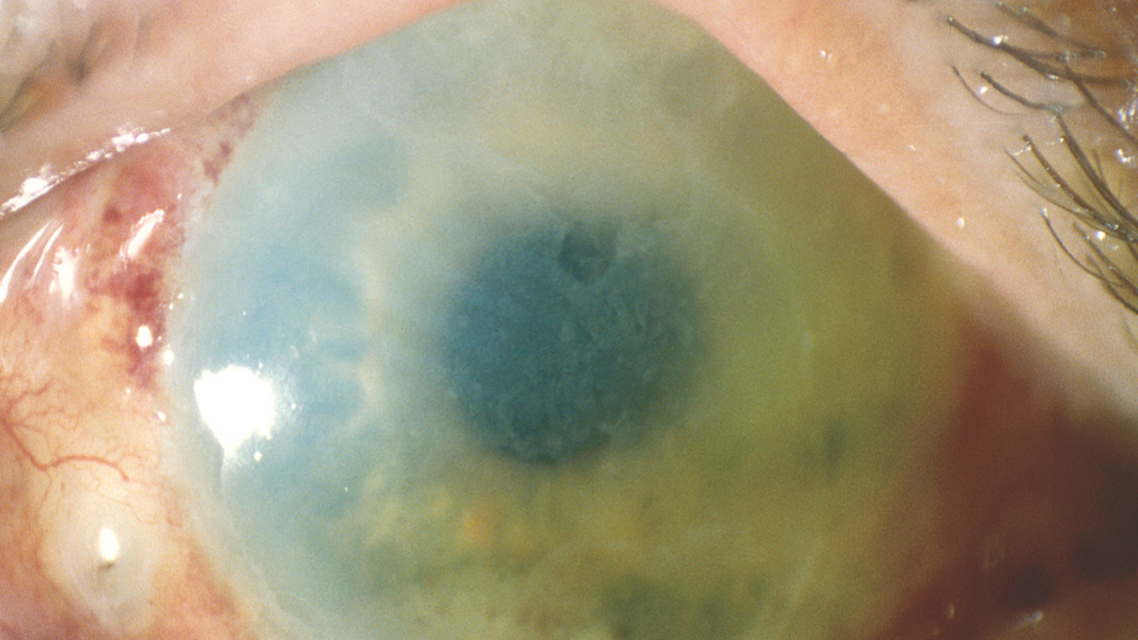
A second differentiator is the pattern of corneal edema. TASS is associated with what Randall J. Olson, MD, termed limbus-to-limbus edema (Figure 1). The swelling is diffuse, affecting the entire cornea.
Corneal edema from endophthalmitis tends to be spotty and localized.

Inflammation
In most cases of TASS, inflammation is confined to the anterior segment (Figure 2). Infectious endophthalmitis involves the vitreous, which is rare with TASS.

Ready to Claim Your Credits?
You have attempts to pass this post-test. Take your time and review carefully before submitting.
Good luck!
Recommended
 July 2026 Issue
Visualizing the Angle
Prasanna Venkatesh Ramesh, MBBS, MS, MNAMS, FICO, FAICO (Cataract, Glaucoma)Prasanna Venkatesh Ramesh, MBBS, MS, MNAMS, FICO, FAICO (Cataract, Glaucoma)