

This month’s column examines how to optimize operational efficiency by leveraging the latest technological advances to allow front office staff to work smarter rather than harder. Although some readers may find that this content aligns with their current practices, others may discover new strategies to enhance ophthalmic practice management.
Promptly is a leading health care technology company whose flagship product is a comprehensive software platform designed to drive patient engagement, automate workflows, and accelerate revenue growth at specialty medical practices. The platform can consolidate a multitude of disparate systems for the benefit of patients, staff, and physicians.
TRACY J. KENNIFF, MBA, OCS

Patient expectations are rising, staffing shortages are prevalent, and the administrative load continues to expand. More than ever, ophthalmology practices must rethink how technology can support rather than complicate the patient experience. This article explores the role of patient engagement software and uses the Carolina Vision Center (carolinavisioncenter.com) in Fayetteville, North Carolina, as an example.
FRAGMENTATION AND FRICTION
Before implementing a unified patient engagement platform, the Carolina Vision Center used five disparate systems for scheduling, check-in, communication, recalls/reactivations, and payments. Each platform had its own interface, login process, training requirements, and support protocols. This patchwork approach led to confusion, inefficiency, significant information technology overhead, and front office complexities.
Many ophthalmology clinics employ a mix of legacy tools or single-feature solutions such as text-only reminders or payment portals. The result is often disconnected workflows that burden staff and frustrate patients.
INTEGRATION
The Carolina Vision Center evaluated several widely used patient engagement platforms. The center’s approach highlights how a growing number of ophthalmology practices favor comprehensive, flexible solutions over rigid, one-size-fits-all products. The center’s key search criteria were as follows:
- No. 1: Ease of use. The platform had to minimize training and information technology dependency.
- No. 2: Configurability. Appointment workflows, forms, and communication logic had to be tailored to the practice’s specialties.
- No. 3: Data fluidity. A unified view of patient interactions before, during, and after the visit was essential.
Ultimately, the Carolina Vision Center selected the Promptly Patient Experience Suite (Promptly Technology; promptlycheckin.com), a platform that offered native integration with the center’s practice management system, customizable scheduling tools, automated check-in, and a robust waiting list. Manual data entry subsequently dropped by 76%, check-in time was cut by 5 minutes per patient (Figure 1), and wait-listing tools kept the cataract surgery schedule full 30 days in advance (Figure 2).

Figure 1. Real patient feedback highlights how streamlined check-in and check-out processes can enhance the overall patient experience.
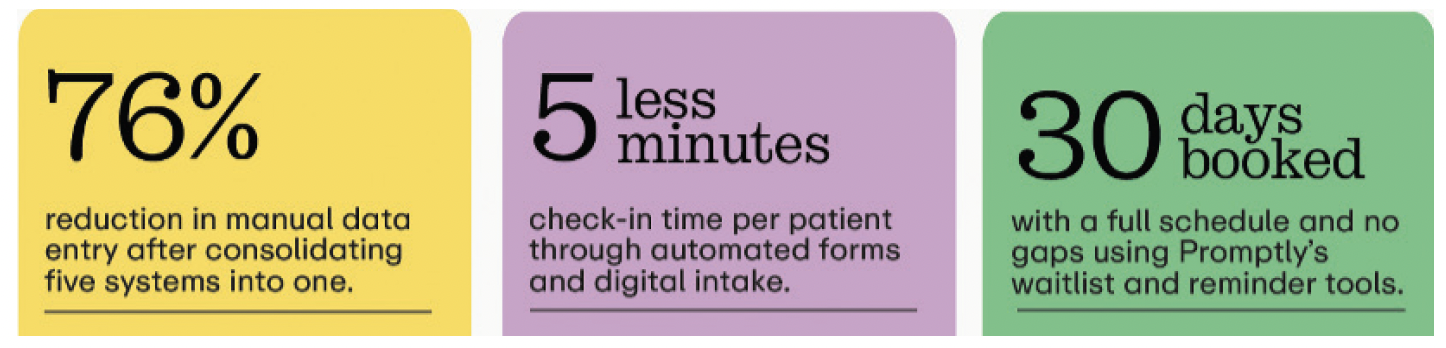
Figure 2. Implementing the Promptly Patient Experience Suite benefitted the Carolina Vision Center in several ways.
REDEFINING THE FRONT DESK EXPERIENCE
At the heart of patient engagement is the patient journey, but the staff journey is important as well. Many practices underestimate how technology can empower staff by eliminating redundant tasks and allowing employees to focus on higher-value interactions.
For example, customizable scheduling decision trees can reduce the need for manual phone calls and clarify patients’ needs up front. Automated pre-visit reminders and form collection tools can reduce the front desk’s workload while enhancing compliance and data quality. Together, these improvements can decrease staff burnout and boost morale—critical factors in a tight labor market.
PERSONALIZED MESSAGING AT SCALE
Automated communication tools can be used to deliver pre- and postoperative messages tailored by appointment type. These can reinforce key clinical instructions while strengthening the relationship between patients and the practice without adding to the staff’s workload. Delivering timely, branded messaging based on the procedure helps support and prepare patients while allowing staff to focus on delivering high-value care.
Craig Gardner, the chief operating officer at Carolina Vision Center, commented, “With Promptly, the patient experience is essentially limitless. We’ve used it for everything from sending preop instructions and tailored education to delivering birthday messages and follow-up forms. If you think outside the box, you start to realize how many touchpoints can be personalized to strengthen the patient relationship.”
A SHIFT IN MINDSET
The experience at Carolina Vision Center reflects a broader shift in mindset: instead of a niche function, patient experience technology can serve as a foundational part of modern practice operations.
The best system for any ophthalmology practice does the following:
- Enhances rather than hinders workflows;
- Integrates into existing practice management systems;
- Offers flexibility to match practice-specific nuances; and
- Provides responsive, knowledge-based support.
The choice of patient engagement technology should look beyond the system’s features to how they work together to support clinical, financial, and human outcomes. When evaluating patient experience platforms, the following are important considerations:
- Scalability. Will the system adapt as the practice’s operations grow or shift?
- Ownership of patient touchpoints. Does the practice retain control over branding, messaging, and timing?
- Interoperability. Does the system integrate cleanly with the practice’s current technology stack, or will workarounds be required?
- Support and training. How responsive is the vendor? Is support proactive or reactive?
Many ophthalmology practices begin with simple automation but soon realize that the full value of patient engagement platforms lies in end-to-end connectivity—from digital intake to post-visit communication and payment.
THE HUMAN SIDE OF ENGAGEMENT
The ultimate goal of patient engagement technology is not just digitization but also humanization. Mr. Gardner commented, “By saving time on manual tasks at check-in, our team can spend more time doing human things that create an exceptional patient experience.”
Modern patient experience platforms are not designed to replace the human touch but to allow more time for it.
The author acknowledged using ChatGPT (GPT-4o, OpenAI) to structure, edit, and clarify the originally submitted manuscript.