
When Haag-Streit launched the Elara 900 slit lamp (Figure 1), clinicians were confident it would deliver the outstanding optical performance they've come to expect from the company. What they might not have expected was the wealth of new features and enhanced functionality designed to streamline examination workflow while also delivering outstanding comfort for both patients and clinicians.
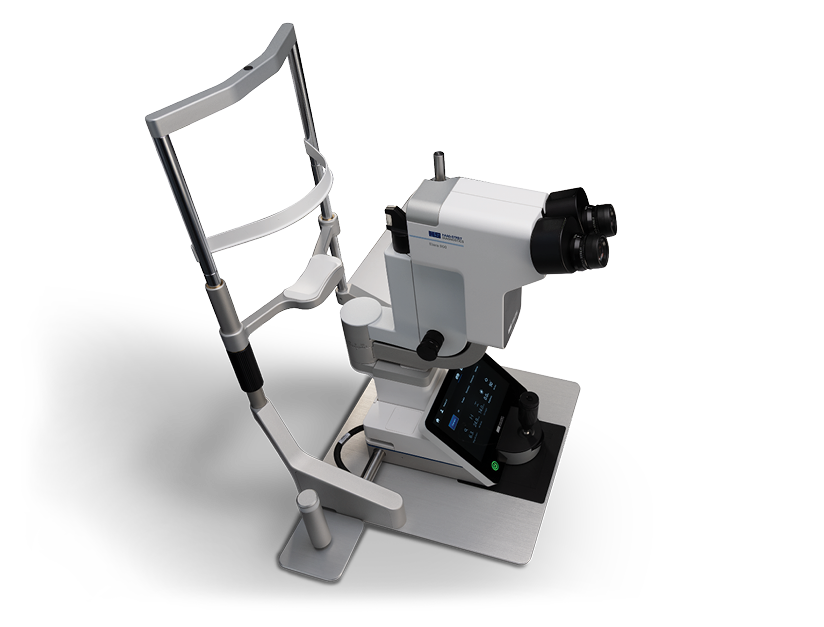
Figure 1. The Elara 900 includes design features to enhance comfort.
A revolutionary projector (“P-Type”) light source, one-touch digital “presets,” and thoughtfully designed ergonomic features are just a few of the advancements that elevate the Elara 900 from the slit lamp as an observation tool to a high-tech diagnostic instrument—a true slit lamp of the 21st century. Eye care professionals are discovering the positive impact of these innovations in their practices every day.
Next-Level Visualization
Haag-Streit is known worldwide for its exceptional optics, but as Iqbal (Ike) K. Ahmed, MD, noted, there's something different about the Elara 900's optical performance.
“That difference has to do with how illumination is created with a projector ('P-Type') light source that utilizes digital light processing (DLP) technology,” he said. “People who are knowledgeable about projectors and home theaters know that DLP technology provides the highest contrast, smooth motion, and the best color accuracy compared to LEDs and LCDs. I believe that's why the clarity, the contrast, and the crispness—the triple C combination—is really optimized with the Elara 900.”
Unlike traditional slit lamps, the Elara 900 can emit colors across the entire visible spectrum, allowing clinicians to select different color temperatures for individual pathologies. By offering more illumination modes than conventional light sources, Elara 900 creates high-resolution, high-contrast images that aid in identifying ocular structures.
“As glaucoma specialists, we examine the front, the back, the angles, and all parts of the eye, and when we're examining postoperative patients, we're looking at blebs and different morphologies,” Dr. Ahmed said. “The ability to titrate the light intensity and improve contrast while examining the angle is very important.”
Cornea specialists also appreciate the Elara 900's image quality. “We can see so much more detail with the Elara 900,” said Preeya K. Gupta, MD. “With this device, I feel like I'm seeing down to the individual epithelial cell level through the microscope.”
According to William G. Gensheimer, MD, the Haag-Streit slit lamp was already at the top of its game, but the Elara 900 gives clinicians so much more, as it preserves every ocular detail for review and comparison. “As you visualize anterior or posterior segment structures, the 'P-Type' illumination allows you to see your examination better,” he said. “Plus, high-quality images and photos can be captured directly from the device and used to educate patients and teach residents and fellows.”
Dr. Ahmed added, “The ability to project in 3D gives an immersive experience that is important for teaching environments. As a high-tech person, I enjoy that aspect of the Elara 900, as well.”
Increased Workflow Efficiency
Haag-Streit has taken an instrument that's critical in day-to-day practice and built in efficiencies that just make sense. With the Elara 900's digital “presets,” clinicians can summarize up to six individual examination scenarios into a single operation. With a single scroll of the “preset” wheel, you can switch between examination modes, reducing the time usually spent on adjusting filters and modifying slit width or illumination intensity. In the clinic, the efficiency of the “presets” quickly becomes apparent.
“I particularly appreciate the 'presets' for my high-throughput examinations—day 1 post-cataract surgery patients, for instance,” Dr. Gensheimer said. “I start my examinations with broad-beam illumination, then narrow it to a slit and examine the anterior chamber on high magnification with bright light to check for cells and flare. Automating those rapid changes saves time on each examination and noticeably improves efficiency over the course of a day.”
When the diagnosis is ocular surface disease, the integrated motorized yellow filter can be activated to increase contrast in specific areas.
“I was particularly impressed with the fluorescein filter,” Dr. Gupta said. “I care for many patients who have ocular surface disease, and I'll often instill a small amount of fluorescein, and I may even use a Wratten filter, to achieve a pristine fluorescein view to detect all of the pathology at the level of the epithelium. On the Elara 900, this is already built in, so all I have to do is touch a button.”
Clinicians also appreciate the efficiency of Elara 900's motorized height adjustment, which allows for fast, precise repositioning with minimal manual effort. The motorized magnification changer enables you to make adjustments directly from the joystick.
Attention to Ergonomics
As an often-overlooked aspect of eye care practice in the past, slit lamp ergonomics is now recognized for its crucial role in supporting the health and productivity of clinicians, as well as the comfort of patients.
The Elara 900 incorporates numerous thoughtful design features that focus on minimizing physical stress while enhancing comfort and ease of use.
From Dr. Gupta's point of view, the ergonomic table design and the inclined oculars get high marks. “As the person on the side driving the slit lamp, I appreciate the nice little cutout, so you can be right at the slit lamp and not have to lean forward, a position that is better for your back,” she said. “And the angle of the ocular is such that you can maintain a more natural head and neck position and avoid straining your neck.”
In addition to giving you the advantage of changing position quickly, Elara 900's motorized height adjustment reduces repeated lifting movements that can strain the wrist and forearm, allowing for smoother and controlled positioning with minimal manual force.
Enhancing patient comfort was also a priority for Haag-Streit when designing the Elara 900. The slit lamp has a height-adjustable chinrest and a spacious headrest that creates more room, reducing pressure on the upper body and improving the experience, particularly for patients with larger body frames. Thus, patients remain at ease, allowing for smoother examinations, and more positive outcomes.
Complemented by an intuitive touchscreen layout, Elara 900 potentially minimizes physical stress, promotes better posture, and improves the examination experience for patients and eye care specialists alike.
Concluding Thoughts
When asked to summarize his initial impressions of the Elara 900, Dr. Ahmed said, “If I could describe the Elara 900 in one word, it would be high-tech. Everything from the illumination, to the clarity of the optics, to the efficiency of the digital system built into the scope, plus the ergonomics enables us to take advantage of great technology. To me, Elara 900 is the slit lamp of the 21st century.”
Dr. Gupta noted, “Haag-Streit has taken a traditional, very critical tool in our day-to-day and made it efficient, more comfortable to use, and fun. Using the Elara 900 was an improved experience for me, patient after patient.”
Dr. Gensheimer recalled his and his staff's initial reaction to the Elara 900 and how that evolved as they began to use it.
“When the Elara 900 arrived in our clinic, there was an immediate 'wow' factor with both myself and the staff,” Dr. Gensheimer said. “Everyone wanted to see what it was and how to use it. As we started to use it, there was a second 'wow' factor when we realized we still had the great optics, but we also had some new ergonomics and efficiencies to help us complete an examination more quickly and more comfortably every day.”
To find out more about the Elara 900, please click here