
As the number of procedural options for managing glaucoma continue to expand, clinicians may feel overwhelmed about how to implement interventional glaucoma principles. A consensus panel of 12 glaucoma specialists and anterior segment surgeons set out to change that by developing a consensus-based protocol aimed at simplifying treatment pathways for real-world practices.1
The panel aimed to provide a consensus opinion on the preferred treatment protocol for patients at each stage of the disease, from ocular hypertension to severe glaucoma, with the primary goal of helping clinicians deliver care that maximizes safety and quality of life for patients without compromising efficacy (Figure 1).1
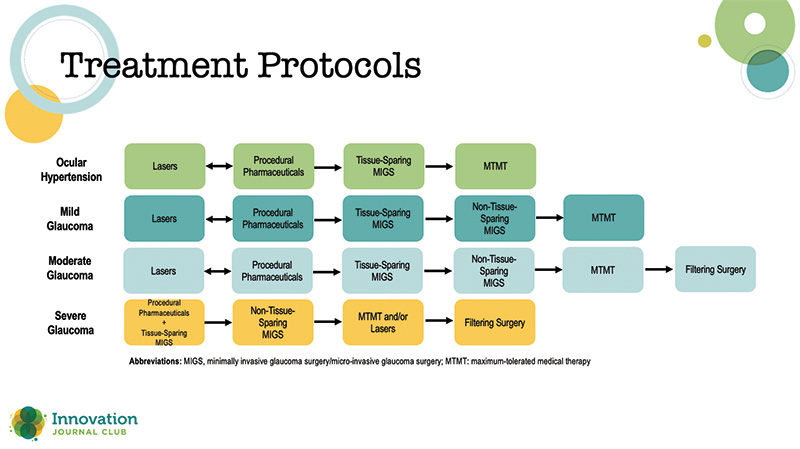
Figure 1. Suggested treatment protocols for implementing interventional glaucoma principles from a consensus panel of 12 ophthalmic surgeons, comprising glaucoma specialists and anterior segment surgeons.
“This [protocol] is not rigid; you have to go step by step, this is the only way to do it. It is more of a framework, a model that you can work within,” said Christine M. Funke, MD, one of the panel members, during an episode of IJC.
Dr. Funke explained that the project began with the recognition that despite the breadth of treatment choices, many providers—particularly those in private or solo practice—struggle to adopt an interventional mindset confidently. To tackle this, each panelist first analyzed their own practice patterns. Surprisingly, many discovered that their approaches were more structured than expected, revealing opportunities to incorporate broader interventions.
“I say for anybody out there, make your own protocol,” Dr. Funke said. “It forces you to analyze yourself a lot more and really push yourself to be the best version of yourself with each and every interaction.”
The group ultimately focused on four patient categories: ocular hypertension and mild, moderate, and severe primary open-angle glaucoma. For each, they asked a simple question: “For 90% of patients walking into the clinic for the first time, what is the most reasonable starting point?” From there, they organized treatment options into “buckets,” including laser procedures, drug-delivery methods, tissue-sparing MIGS, non–tissue-sparing MIGS, and traditional filtration surgery. Safety and tissue preservation became the guiding principles, recognizing that most patients will require multiple interventions across their lifetime.
One of the clearest consensus points was the role of selective laser trabeculoplasty (SLT). For ocular hypertensive and mild to moderate glaucoma patients, SLT emerged as the preferred first-line treatment. With strong evidence supporting its effectiveness, especially when used early, and growing data showing that patients who receive procedures tend to be more compliant with follow-up versus those on medications, the panel viewed SLT as a “slam dunk” for initial therapy. Medications still play an important role, Dr. Funke emphasized, but increasingly as interim bridges rather than long-term solutions.
“We're not saying medications are going to go away. We're never going to stop using them, but we have to use them with a lighter touch,” Dr. Funke said.
1. Funke CM, Ristvedt D, Yadgarov A, Micheletti JM. Interventional glaucoma consensus treatment protocol. Ex Rev Ophthalmol. 2025;20(2):79-87.