
Ophthalmologists have long known that the suprachoroidal space can be utilized to lower intraocular pressure (IOP) in glaucomatous eyes. Since the early 1900s, surgeons made use of a cyclodialysis cleft (a separation of the ciliary body from the scleral spur), although the process was fraught with issues such as hypotony, spontaneous closure, and IOP spikes. More recently, the ab interno Cypass microstent (Alcon) became popular before it was removed from the market due to endothelial cell loss. Today, we have new suprachoroidal devices to consider, such as the CycloPen System with AlloFlo Biotissue (Iantrek), which is now commercially available.
The Annual ACES/SEE Caribbean Eye Meeting presents hot topics for anterior segment surgeons and healthcare professionals.
Mark your calendar for the 2026 Caribbean Eye meeting, taking place February 6–9 at the luxurious Kempinski Hotel in Cancún, Mexico. Join Program Chairs William Wiley, MD, and Robert Weinstock, MD, alongside esteemed ophthalmology experts, for an inspiring event focused on advancing eye care. Earn CME/COE credits while gaining insights, building connections, and boosting your clinical skills in a breathtaking tropical setting. Below, you’ll find a summary of one of the standout presentations from the 2025 meeting—a preview of the rich content Caribbean Eye has to offer. To watch this and other key sessions from the meeting, visit https://www.caribbeaneyemeeting.com/2025-meeting
Benefits, Design, and Application
A benefit of conducting an ab interno surgery is that we are not creating a bleb or doing incisional surgery; this is angle-based surgery that involves the ciliary body and suprachoroidal space. With the CycloPen System with AlloFlo Biotissue, we create a cyclodialysis under the scleral spur and then implant homologous, biocompatible scleral tissue (prepared by CorneaGen) to create structural buttressing. The CycloPen device arrives preloaded with two segments of the AlloFlo Biotissue, and it has a slider to retract the guide sheath and deploy it in the suprachoroidal space (Figure 1).

Figure 1. The CycloPen System with AlloFlo Biotissue uses a homologous scleral tissue that is biocompatible to surrounding tissue in the eye.
Surgical Steps
Before using the CycloPen System, I begin by making a controlled cyclodialysis cleft. I prefer to use a small, curved Koch spatula that is blunt on the end and conforms nicely to the curvature of the globe. Next, I dilate the cleft with viscoelastic and place the AlloFlo tissue into the suprachoroidal space for scleral reinforcement and preservation of the cleft (Figure 2). It’s possible to use one or two spacers, depending on the severity of the disease or the surgeon’s preference. I prefer to leave the AlloFlo material slightly under-implanted, because it’s easier to nudge it a bit further along to leave it flush with the angle.
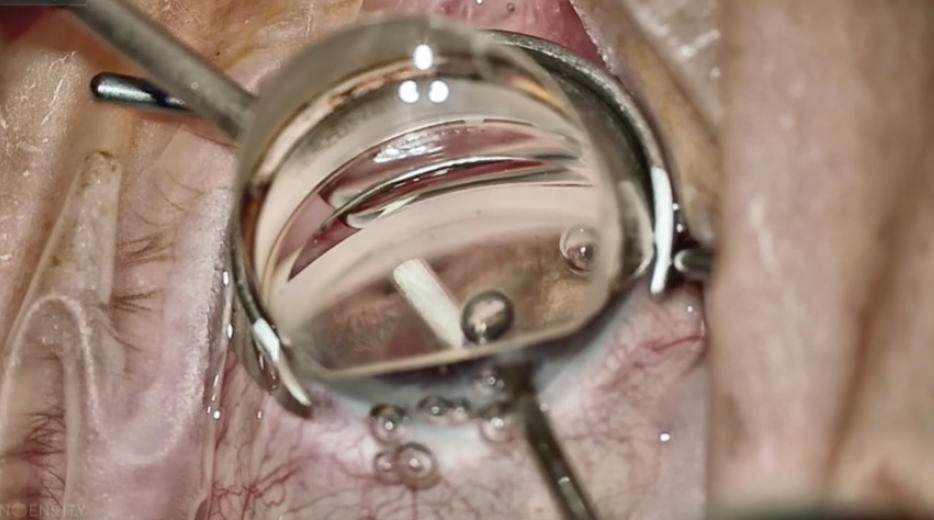
Figure 2. Insertion of AlloFlo tissue into the suprachoroidal space using the CycloPen System.
The main issues to watch out for are closure of the cleft and an elevated IOP postoperatively. This procedure allows patients to recover quickly. They are usually back to regular daily activities following surgery.
Conclusion
Since I have begun these procedures, I have adjusted my surgical routine to focus on performing very meticulous cleft creation. I have also changed to using one graft rather than two, or two individual spacers at different clefts rather than creating one large cleft for two grafts. This is a more straightforward procedure in my hands and has led to less iris trauma and hyphema. I routinely give patients a bit of fentanyl at the beginning of the case, because they often feel the insertion of the graft.
Additionally, I like to ensure patients are well past the healing stages from the cleft (about 6 weeks) before I start to decrease their medications. The comfort and safety of the procedure has advanced to the point that I can offer it to patients earlier in their disease management process.
To learn more about the 2026 Caribbean Eye Meeting and register to attend, visit CaribbeanEyeMeeting.com